The Benazir Income Support Programme (BISP) remains one of Pakistan’s most important social safety initiatives, especially for women who manage household responsibilities. In 2026, BISP has introduced clearer procedures for thumbprint (biometric) updates, making it easier for women to receive their payments without repeated failures or long delays.
Many beneficiaries were unable to withdraw their Rs. 13,500 BISP Qist due to fingerprint mismatch, device errors, or missing biometric records. This updated guide explains why thumbprint updates are required, how to complete them correctly, and how to receive payments smoothly.
Why Thumbprint Updates Are Important for BISP Payments
BISP uses biometric verification to ensure that financial assistance reaches the rightful beneficiary. Payments are released only after fingerprints match official records.
Common reasons for biometric failure include:
-
Faded fingerprints due to age or manual work
-
Old biometric data stored in NADRA records
-
Device compatibility issues at payment points
-
Missing or unclear thumbprints
Without updated biometrics, payments may remain blocked even if eligibility is confirmed.
Zero-Token Procedure for Women Without Clear Thumbprints
For women who do not have a clear thumbprint or face repeated biometric failures, BISP and NADRA provide a Zero-Token solution.
Key facts about Zero-Token:
-
Completely free of cost
-
Does not require a new CNIC
-
Updates biometric records safely
-
Officially accepted by BISP for verification
This method ensures that no eligible woman is excluded due to physical limitations.
How to Update Thumbprints at NADRA (Step-by-Step)
After receiving a zero-token or referral, follow these steps:
-
Visit your nearest NADRA Registration Center
-
Wait for your turn at the biometric counter
-
Provide your CNIC and zero-token (if applicable)

-
Carefully re-enter thumbprints as guided
-
Confirm with staff that biometric data is successfully updated
This update ensures your fingerprints work with BISP payment systems.
Syncing NADRA Biometric Data with BISP Records
Updating thumbprints at NADRA is not enough on its own. Your updated data must be linked with BISP records.
What to do next:
-
Visit the nearest BISP Tehsil Office
-
Inform staff about your biometric update
-
Submit CNIC for record synchronization
-
Wait for system confirmation (usually via phone or SMS)
Once synced, your payment status becomes active.
BISP Payment Methods Until March 2026
Until March 2026, BISP payments are issued through:
-
Authorized agents
-
Designated shops
-
Partner payment centers
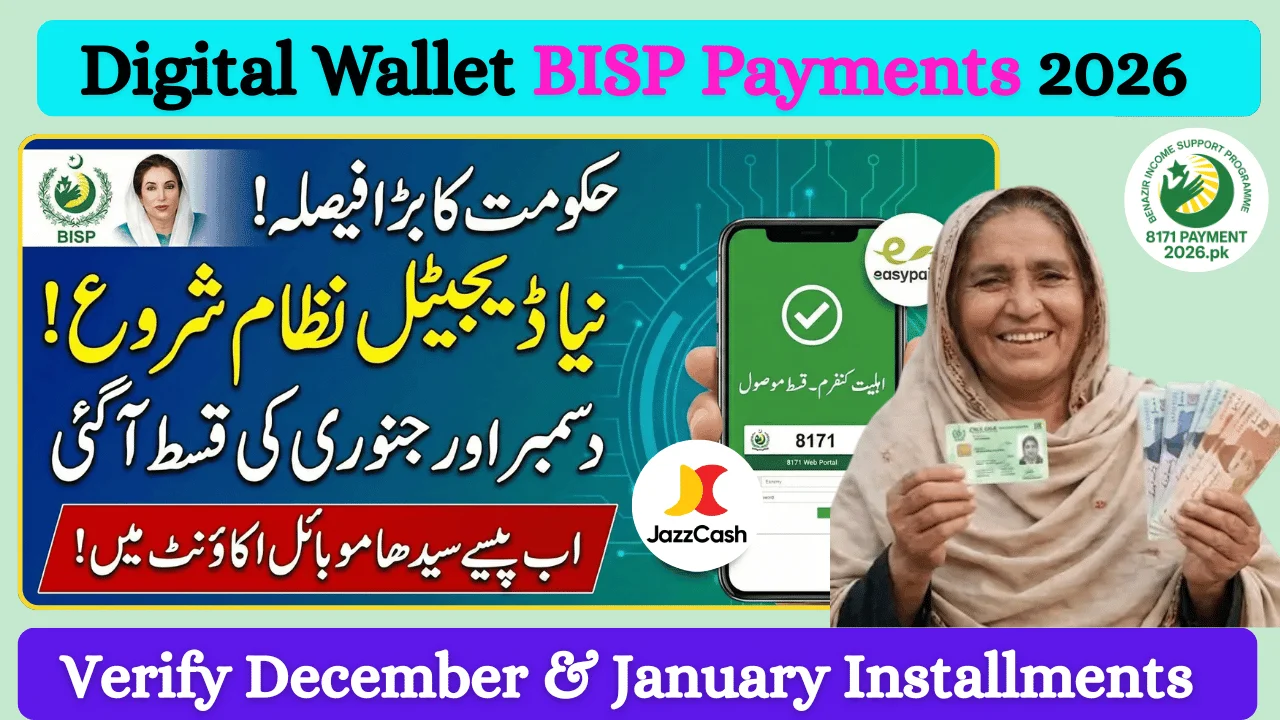
After March 2026, SIM-based digital wallet payments will gradually begin.
Helpful tips:
-
Visit payment points with updated biometric devices
-
Try another center if verification fails at one location
-
Keep your CNIC and registered SIM active
Complete Thumbprint Update & Payment Process (Quick Summary)
| Step | Action | Where |
|---|---|---|
| 1 | Get zero-token (if needed) | NADRA |
| 2 | Update thumbprints | NADRA |
| 3 | Sync records | BISP Office |
| 4 | Receive confirmation | SMS / Call |
| 5 | Collect payment | Agent / Shop / SIM |
Tips to Avoid Payment Delays in 2026
-
Always verify status on 8171.bisp.gov.pk
-
Ensure CNIC data matches NADRA records
-
Use updated payment centers
-
Avoid agents asking for fees
-
Keep payment messages and confirmations safe
Frequently Asked Questions (FAQs)
Is thumbprint update mandatory for BISP 2026?
Yes, biometric verification is compulsory for payment release.
Is the zero-token process free?
Yes, it is 100% free at NADRA.
Can I receive payment without thumb verification?
Only after alternative biometric approval through NADRA and BISP.
When will SIM-based payments start?
After March 2026, in phases.
Final Words
The BISP 2026 thumbprint update system has made biometric verification easier and more inclusive for women. By updating fingerprints through NADRA, syncing records with BISP, and following official procedures, beneficiaries can receive payments securely and without repeated failures.
Always rely on official BISP offices, the 8171 portal, and NADRA centers to protect your eligibility and payments.