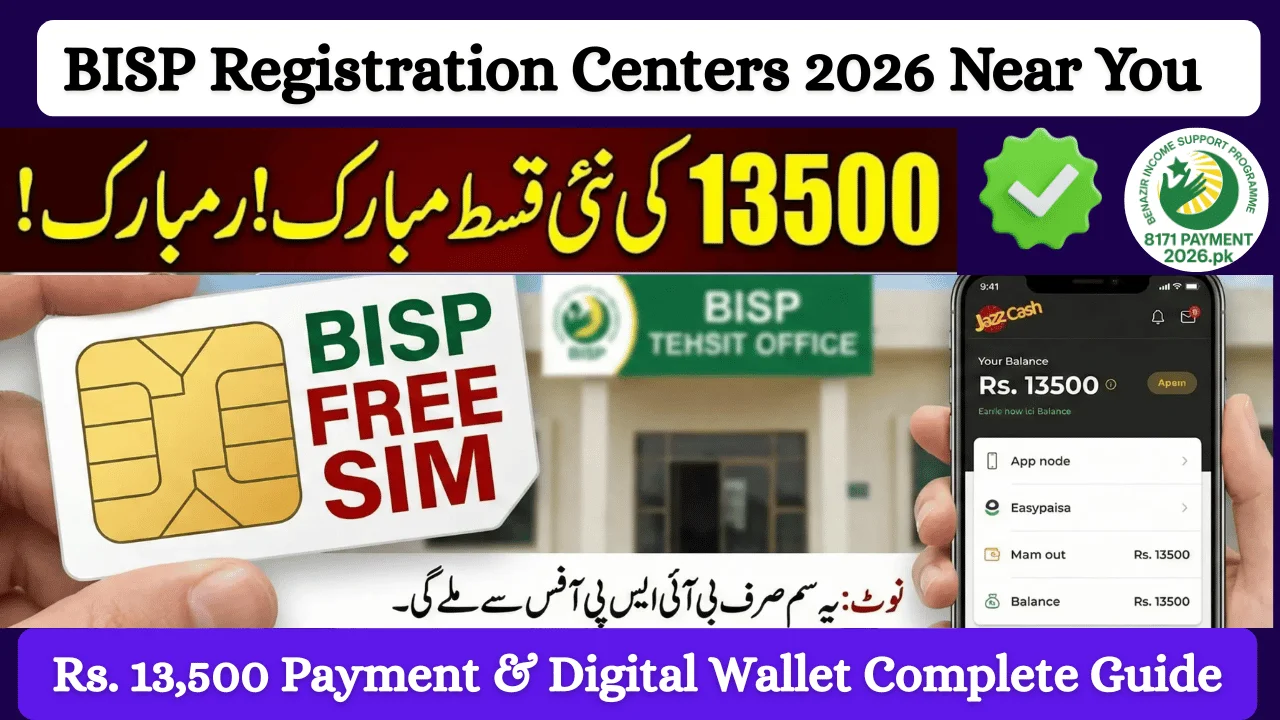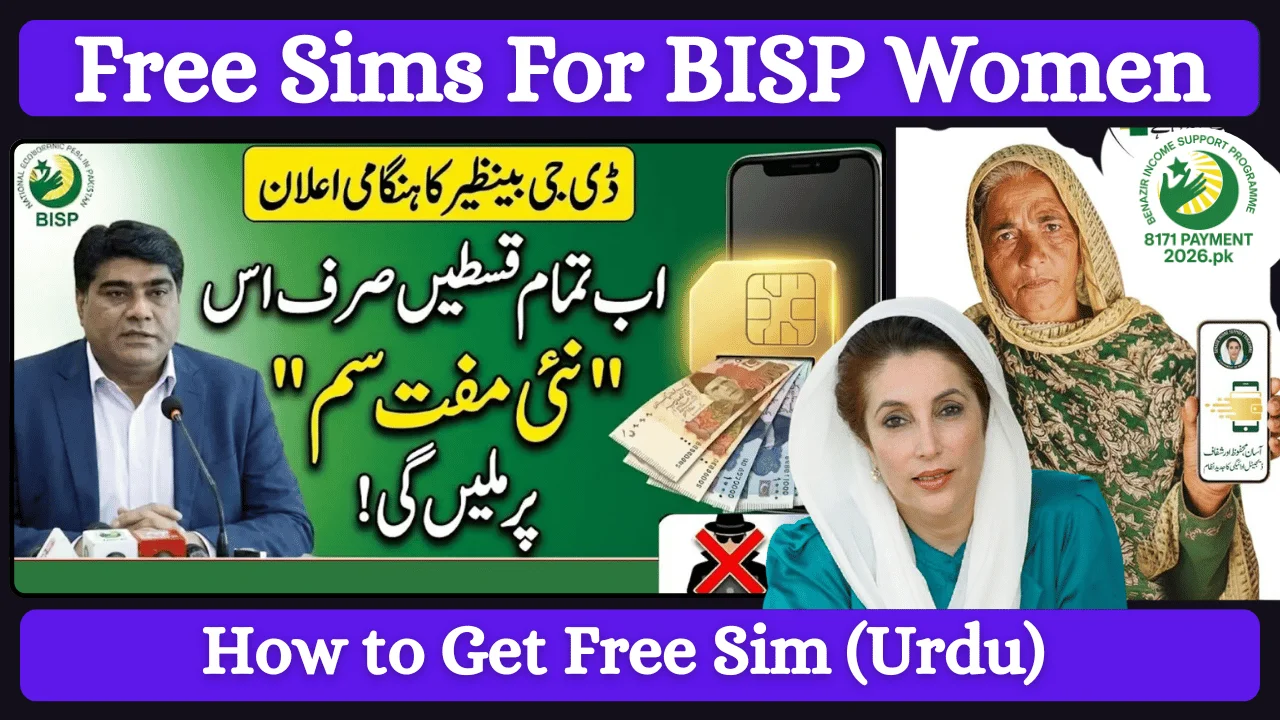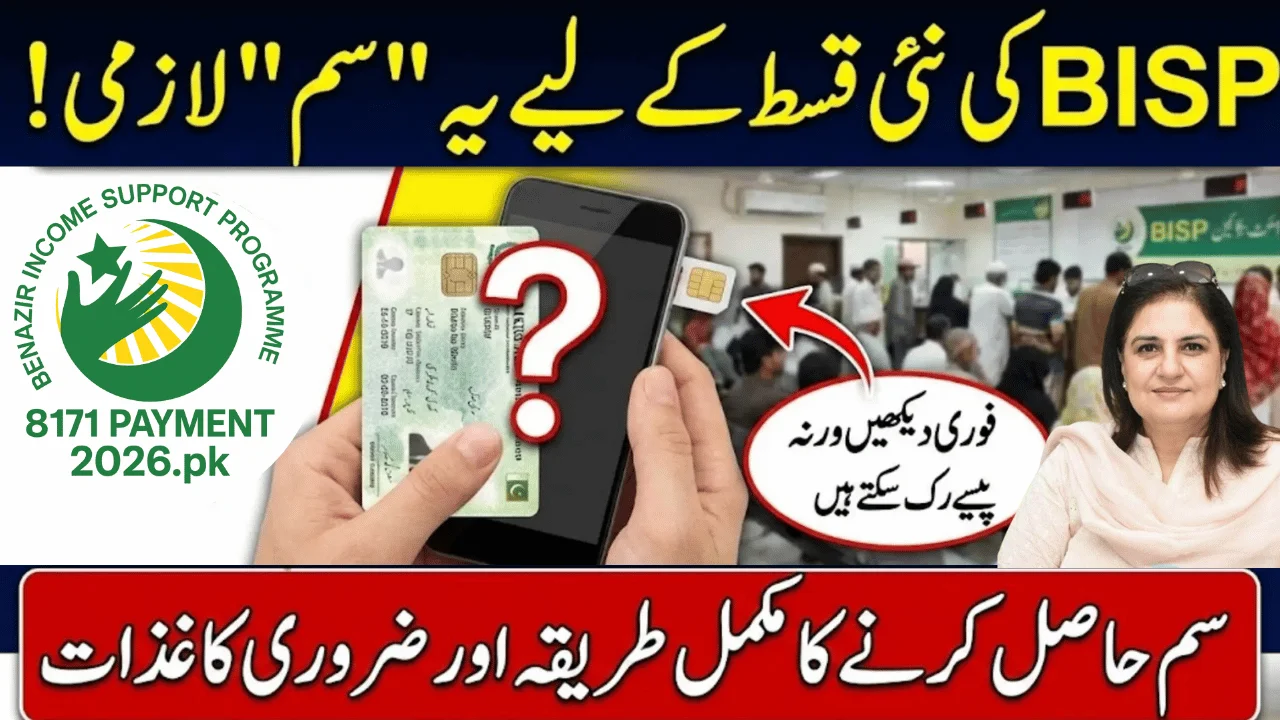
The Benazir Income Support Programme (BISP) has officially begun issuing free SIM cards across Pakistan as part of its nationwide transition to a digital Kafalat payment system. This major reform is designed to ensure that women beneficiaries receive their financial assistance directly, securely, and with dignity, without relying on agents or crowded cash centers.
Under this new system, future Kafalat installments (Qist) will be transferred into SIM-based digital wallets, with payments expected to start from March 2026 for beneficiaries who complete the required steps.
Government’s Vision for a Dignified Kafalat System
According to officials from the Ministry of Poverty Alleviation and Social Protection, this reform is being implemented under the direct guidance of Prime Minister Shehbaz Sharif. The aim is to remove long-standing problems faced by beneficiaries, including:
-
Long queues at payment points
-
Confusion about payment schedules
-
Dependence on middlemen
-
Unauthorized deductions
By using technology, the government seeks to ensure respect, privacy, transparency, and convenience for women enrolled in the Benazir Kafalat Program.
Introduction of the SIM-Based Digital Wallet System
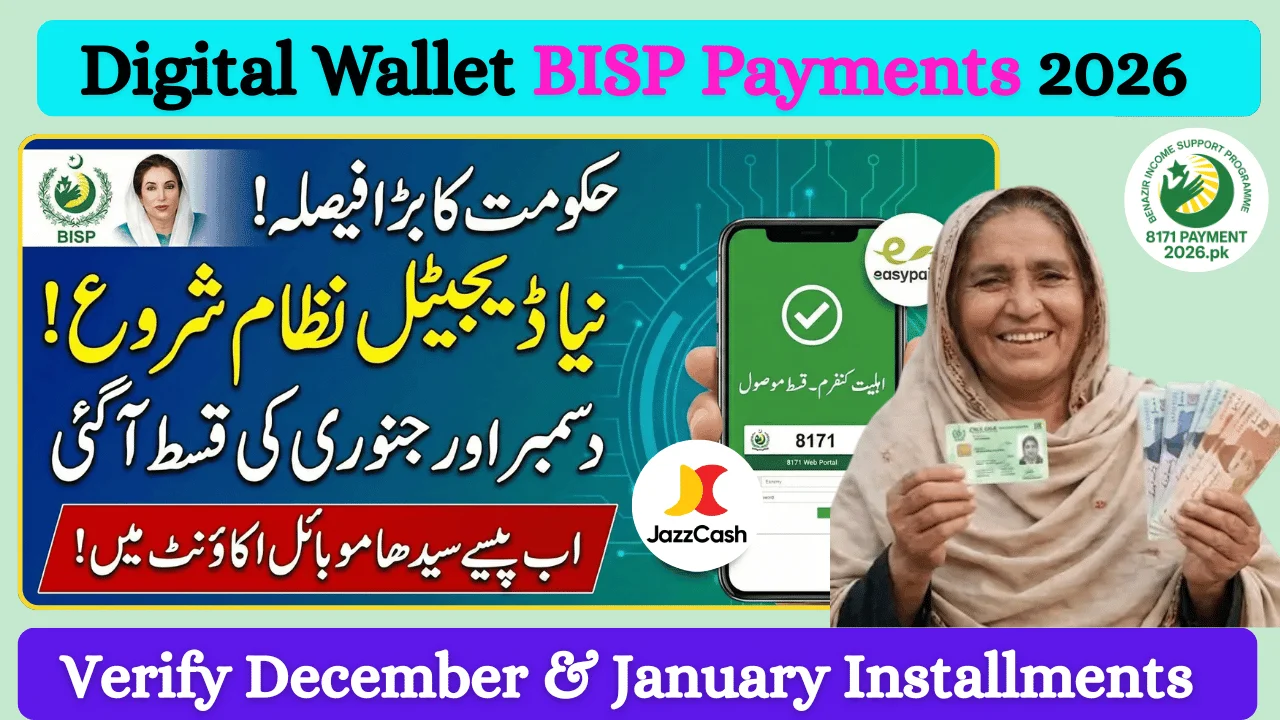
Under the new mechanism, BISP-issued SIM cards act as digital wallets. Once activated by BISP, these SIMs will receive Kafalat installments directly.
This model is especially suitable for Pakistan, where many women do not have traditional bank accounts but do have access to mobile phones. The SIM-based system bridges the gap between financial inclusion and real-world accessibility, particularly in rural and low-income urban areas.
Millions of digital wallet accounts have already been created, indicating that the transition is happening at a national scale.

Nationwide Progress of BISP Free SIM Distribution
BISP has established SIM distribution centers across Pakistan, making it easier for women to collect their SIM cards close to their homes. These centers handle:
-
CNIC verification
-
Beneficiary guidance
-
SIM issuance
-
Basic instructions for safe usage
This decentralized approach has significantly reduced pressure on major BISP offices and improved access for women living in remote districts.
Current Status of BISP 13,500 Qist During Transition
At present, some women have already received payments under the old system, while others are waiting. For most pending cases, the delay is due to SIM distribution and system alignment, not disqualification.
This is an important clarification:
❗ Waiting for payment does not mean removal from the program.
Women who received eligibility or payment messages but did not receive funds are likely part of the transition phase. Their Qist will be released once the SIM-based wallet system becomes fully operational.
March 2026 Timeline for Digital Kafalat Payments
BISP has clearly communicated that SIM-based Kafalat payments will begin from March 2026. No payments will be issued through these SIMs before that date.

This waiting period allows authorities to:
-
Complete verification
-
Test system stability
-
Ensure error-free transfers
The goal is to make future payments smoother, faster, and more predictable.
Key Update Summary
| Update | Official Status |
|---|---|
| SIM Distribution | Ongoing nationwide |
| Qist via SIM | Starts March 2026 |
| Distribution Pause | After Dec 20, 2025 |
| Payment Method | SIM-based digital wallet |
Important Instructions for Women Who Received SIM Cards
Women who have already collected their BISP SIM cards must strictly follow official instructions to avoid technical issues.
Do NOT:
-
Activate the SIM yourself
-
Create a PIN or wallet account
-
Use the SIM for calls, SMS, or internet
Do:
-
Keep the SIM safe
-
Leave it unused until official activation
-
Follow instructions given by BISP staff
Using the SIM incorrectly may delay Qist transfers.
What Women With Pending Messages Should Do
Some beneficiaries have received messages indicating eligibility or upcoming Qist but have not received further updates. Such women should:
-
Ensure CNIC and household data is updated
-
Wait for official instructions
-
Visit designated BISP centers if asked
After verification, eligible women may receive a new message instructing them to collect their SIM card.
Role of SIM Distribution Centers Across Pakistan
To reduce travel and confusion, provincial and district-level SIM distribution centers have been set up nationwide. These centers:
-
Provide guidance in simple language
-
Assist elderly and rural women
-
Clarify timelines and precautions
This localized support system plays a key role in making the digital transition smoother.
Impact of Poverty Score on Future Kafalat Qist
Eligibility for future installments remains linked to the poverty score determined through NSER data. Women whose scores remain within the approved range will continue receiving assistance.
Keeping household information accurate is essential, as future reviews will rely on these records.
Temporary Halt of SIM Distribution After December 20, 2025
Authorities have confirmed that SIM distribution will pause after December 20, 2025. This temporary halt will allow BISP to review and stabilize the system before activating payments.
Women who are eligible but have not yet collected their SIM cards should do so before this deadline to avoid payment delays in 2026.
Final Words
The rollout of BISP free SIM cards across Pakistan marks a major shift toward a modern, secure, and dignified payment system. While the transition requires patience, it promises long-term benefits for women beneficiaries, including safer payments, fewer delays, and greater control over financial assistance.
Eligible women are advised to collect their SIM cards on time, follow official instructions carefully, and remain attentive to updates as Kafalat Qist payments begin from March 2026.
Disclaimer
This website provides informational content only and is not affiliated with BISP or any government department. Always rely on official BISP centers and the 8171 helpline for verification and payment information.